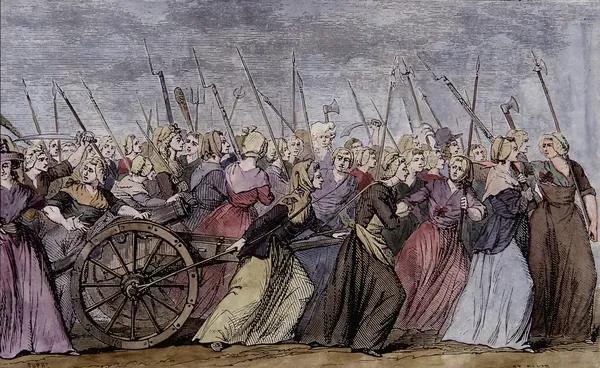
On October 5, 1789, thousands of Parisian women — hungry, furious, and armed with pikes and cannons — marched twelve miles through the rain to the Palace of Versailles. By the time they left, they had forced the king and his family to return to Paris forever.
Bread and Fury
Despite the revolutionary events of the summer, Paris was still suffering. Bread prices remained catastrophically high. On October 5, women gathered at the market of Les Halles — but there was no bread. They swept through the city, raiding the Hôtel de Ville for weapons. By mid-morning a crowd of six to seven thousand had formed, their target: Versailles.
The March and the Confrontation
The march took several hours through autumn rain and mud. They were later joined by Lafayette and 20,000 National Guard soldiers. Louis XVI agreed to release grain stores to Paris — but the crowd wanted more. They wanted the king to come to Paris himself.
"The baker, the baker's wife, and the baker's boy!"
— The crowd's chant for the royal family, October 5–6, 1789The Palace Is Breached
In the early hours of October 6, marchers broke into the palace. Marie Antoinette barely escaped through a secret passage. Two guards were killed. Lafayette restored order and led the royal family onto the balcony — where Louis agreed to go to Paris.
The King Comes to Paris
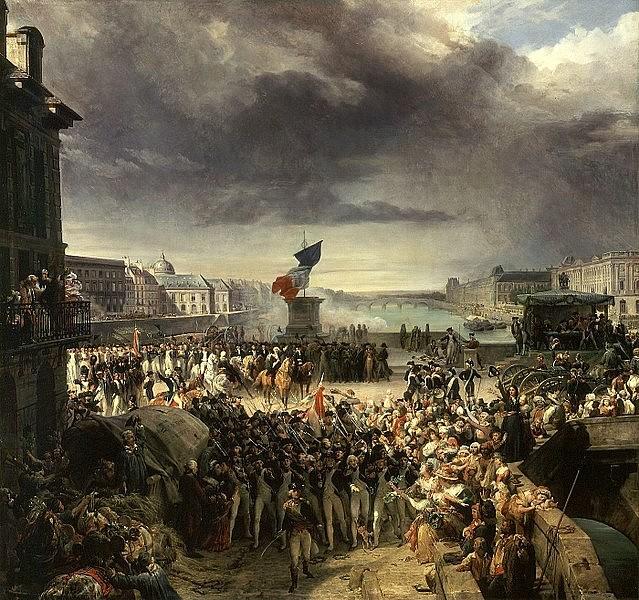
The nine-hour procession back to Paris was extraordinary and ominous. The royal family was installed in the Tuileries Palace — and would never return to Versailles. The March demonstrated the extraordinary power of ordinary people in the Revolution, proving that hunger and politics were inseparable.