On June 20, 1789, the delegates of the Third Estate arrived at their usual meeting hall at Versailles only to find the doors locked and guarded by royal soldiers. Rather than retreat, they walked to a nearby tennis court — and changed history forever.
The King Locks the Door
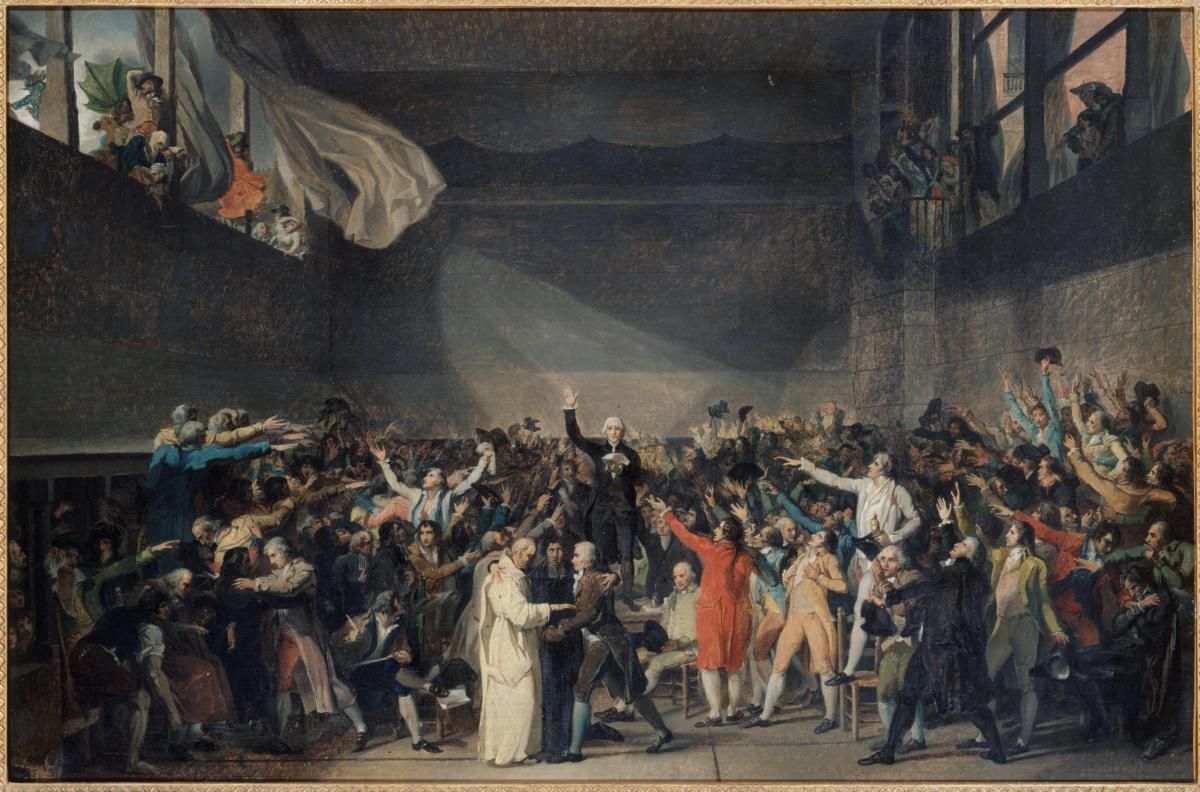
After the Third Estate declared itself the National Assembly on June 17, King Louis XVI was furious. On June 20 he ordered the assembly hall closed for "renovations" with no warning. Royal troops stood at the doors. The move was intended to intimidate — instead it backfired completely. The delegates moved to the nearby royal Jeu de Paume tennis court.
The Oath
Inside the bare, echoing tennis court, Jean-Sylvain Bailly climbed onto a table and read aloud the oath drafted by delegate Jean-Joseph Mounier. One by one, 576 of the 577 delegates came forward to sign. Only one man refused — the deeply conservative Joseph Martin-Dauch.
"We swear never to separate and to reassemble wherever circumstances require until we have established a sound and just constitution."
— The Tennis Court Oath, June 20, 1789The King's Response
When a royal official threatened the delegates with expulsion, Mirabeau delivered one of the Revolution's most famous lines: "Go tell those who sent you that we are here by the will of the people, and that we will not leave except at the point of bayonets." Louis XVI backed down on June 27. It was the first time in French history that royal authority had yielded to popular defiance.